Unitree G1 EDU | U1-U14 | 휴머노이드 개발 플랫폼

변형 제품: EDU-U5 | Ultimate C
Unitree G1 개발 플랫폼
Unitree G1 Edu 개발 플랫폼과 Professional 및 Ultimate 버전은 연구, 개발 및 애플리케이션별 로봇공학을 위한 휴머노이드 로봇 시스템입니다. 상위 및 하위 수준의 추가 개발, SDK, AI 알고리즘, 100-TOPS 확장 독을 통해 자체 애플리케이션을 구현할 수 있습니다. 기본 모델에 따라 23 또는 29 자유도를 사용할 수 있습니다. Professional 및 Ultimate 버전은 사전 구성된 그리핑 및 핸드 솔루션을 추가로 제공하며, 일부는 촉각 센서와 손목 장착 RGB 카메라를 갖추고 있습니다. 이를 통해 특히 그리핑, 매니퓰레이션 및 AI 애플리케이션을 개발하고 테스트할 수 있습니다.
신제품 하이라이트
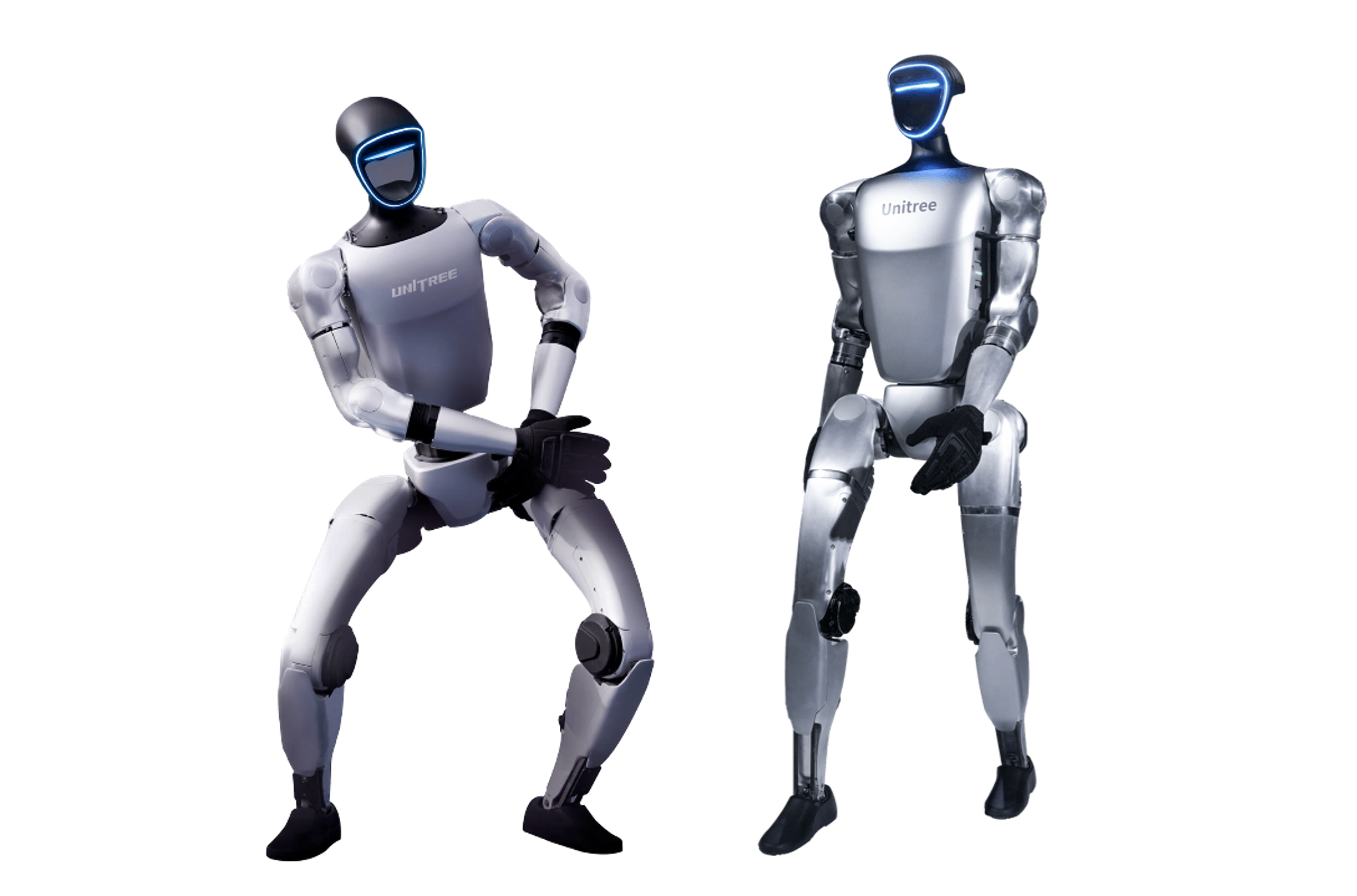
The differences between the development platforms
G1 EDU Standard | 23 DOF | basis of the Professional variants --> Dummy Hand | EDU-U1
G1 EDU Plus | 29 DOF | basis for Ultimate variants --> Dummy Hand | EDU-U2
G1 EDU- Professional (23 DOF Basis)
Professional A → Dex3-1 | 3 Finger | EDU-U9
Professional B → Dex3-1 | 3 Finger with tactile sensors | EDU-U10
Professional E → BrainCo Revo 2 Basic | 5 Finger | EDU-11
Professional F → BrainCo Revo 2 Touch | 5 Finger with tactile sensors | EDU-12
Professional G → Dex2/5 | 5 Finger | EDU-14
Professional H → Dex1-1 Gripper Plus
Professional I → Wuji Hand 2 | 5 Finger
G1 EDU- Ultimate (29 DOF Basis)
Ultimate A → Dex3-1 | 3 Finger | EDU-U3
Ultimate B → Dex3-1 | 3 Finger with tactile sensors | EDU-U4
Ultimate C → Inspire DFQ | 5 Finger | EDU-U5
Ultimate D → Inspire E2 | 5 Finger | with tactile sensors | EDU-U6
Ultimate E → BrainCo Revo 2 Basic | 5 Finger | EDU-U7
Ultimate F → BrainCo Revo 2 Touch | 5 Finger with tactile sensors | EDU-U8
Ultimate G → Dex2/5 | 5 Finger | EDU-13
Ultimate H → Dex1-1 Gripper Plus
Ultimate I → Wuji Hand 2 | 5 Finger
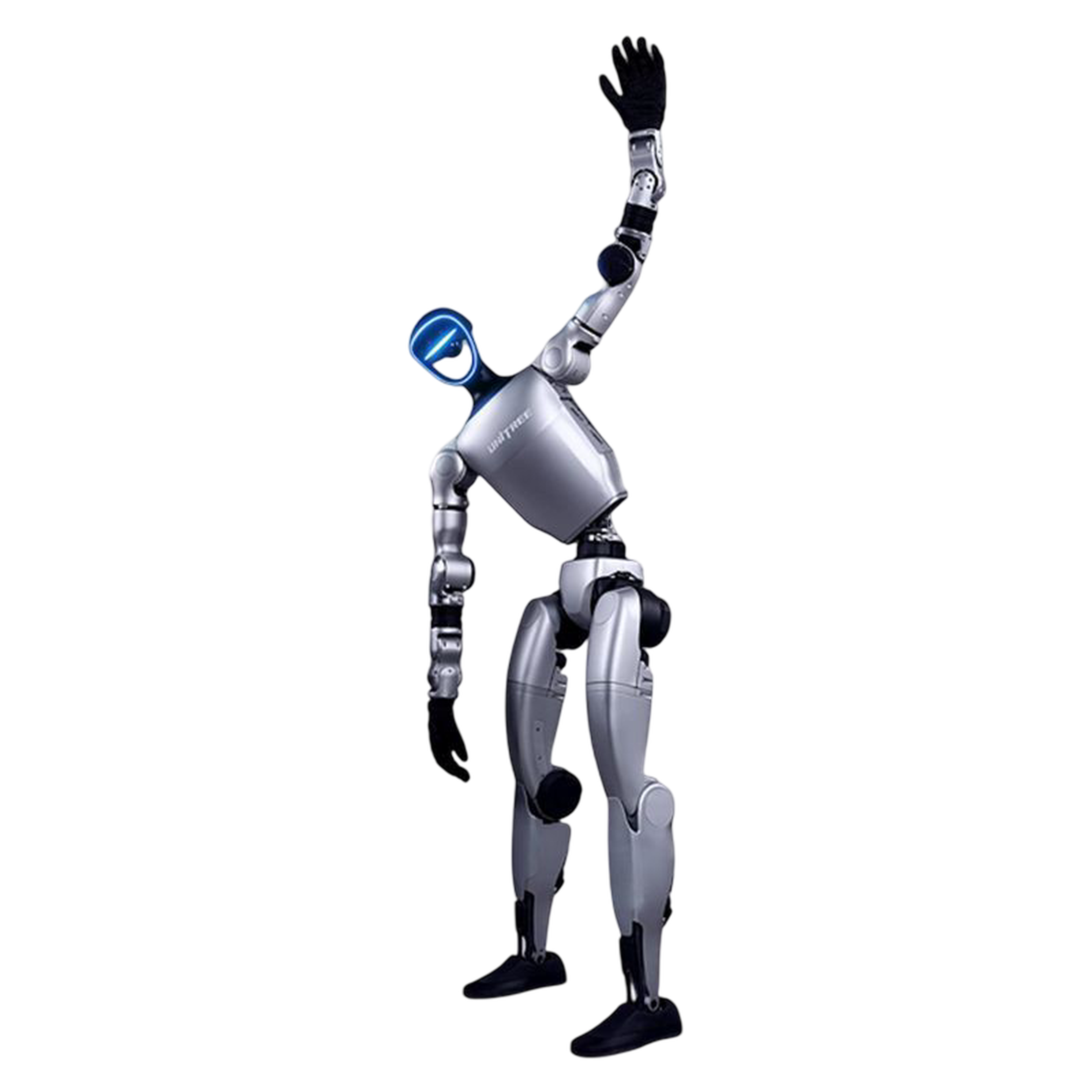
Humanoid Development Platform Unitree G1 EDU U5
The Unitree G1 EDU U5 is a 1,270 mm tall humanoid development platform for research, education, and advanced robotics projects. Weighing around 35 kg, the robot is suitable for laboratory and demonstration setups. The replaceable 13S smart battery provides approximately two hours of operation, depending on motion and computing load. A depth camera and 3D LiDAR provide environmental data for perception, navigation, and autonomous experiments. Dual encoders at the joints, internal cable routing, and local air cooling support repeatable motion. Knee joints with up to 120 Nm of torque and an arm payload of up to 3 kg provide the foundation for dynamic motion sequences, grasping experiments, and mobile manipulation. The payload and motion profile must be adapted to the experimental setup.
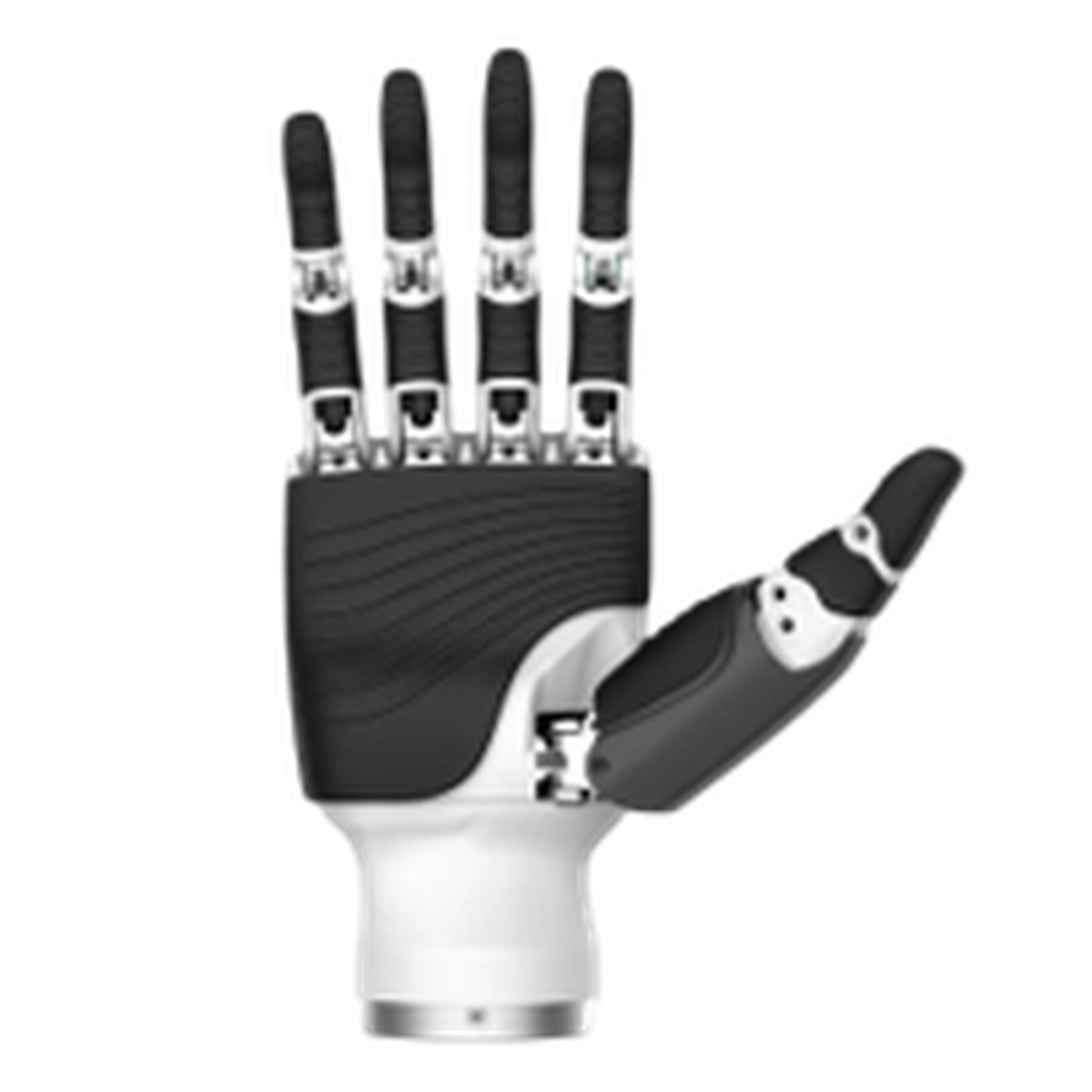
Inspire DFQ Five-Finger Hands on the Unitree G1 EDU U5
The G1 EDU U5 is configured with Inspire DFQ five-finger hands without tactile sensing. Each hand features six active degrees of freedom and twelve joints. The five fingers enable a wide range of grasping patterns and are suitable for experiments with objects of different shapes. Repeatability is ±0.20 mm; gripping force is 6 N at the thumb and 4 N at each of the other fingers. Four-finger flexion of up to 570°/s enables fast opening and closing movements. Wrist-mounted RGB cameras provide image data for object detection, grasp point detection, and vision-guided manipulation. Since the hands do not feature tactile sensing, contact and gripping force must be controlled through the control system, known object characteristics, and appropriate motion limits.
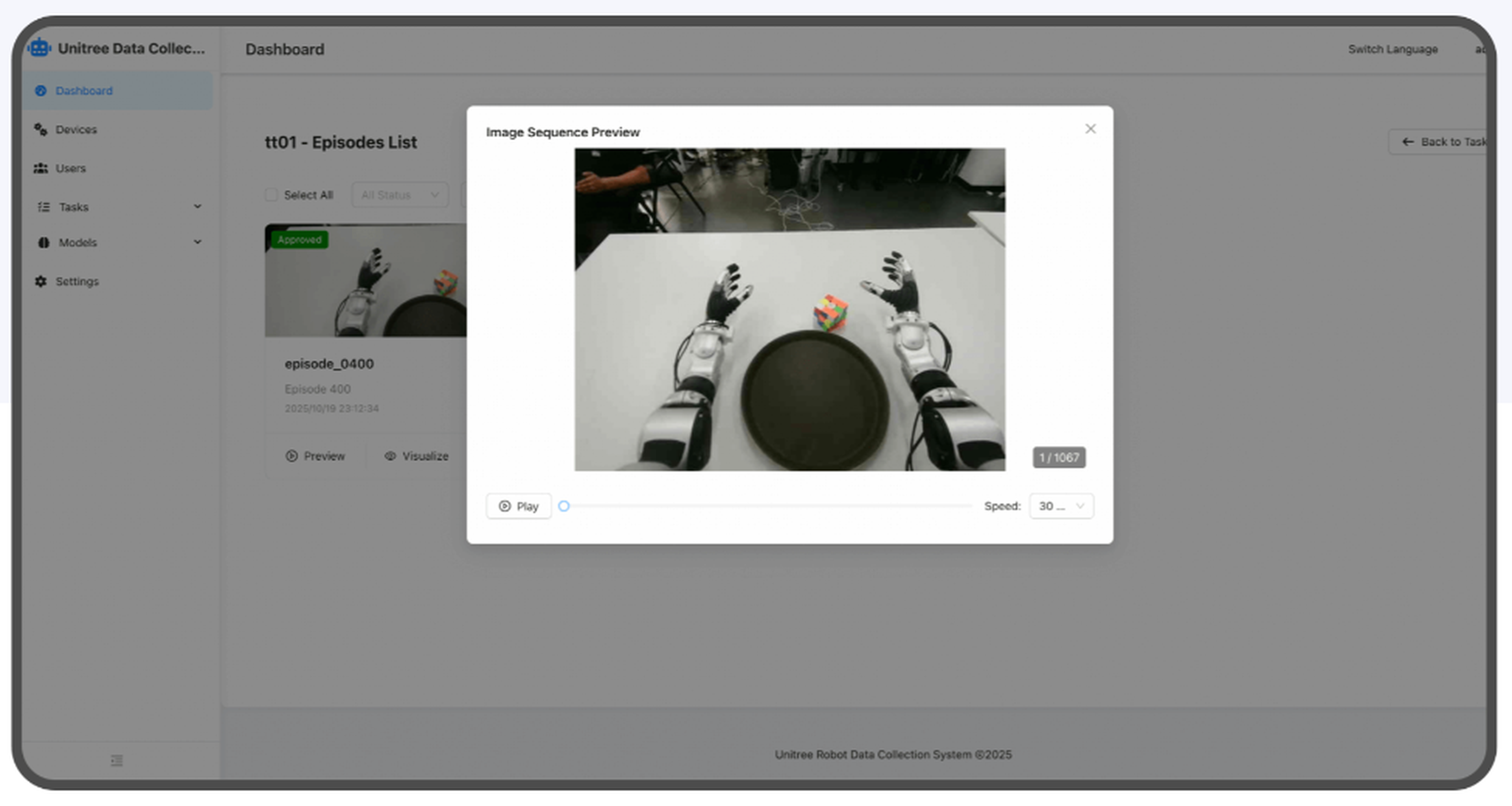
Control and Programming the G1 EDU platform
The G1 EDU platform provides high-level and low-level interfaces for custom applications. Developers can implement motion sequences, joint-level control tasks, and manipulation processes. The integrated expansion dock with up to 100 TOPS is suitable for AI algorithms, machine vision, navigation, and positioning. Wi-Fi 6 and Bluetooth 5.2 facilitate integration into laboratory environments, while Smart OTA supports system updates. When programming the Inspire DFQ hands, finger positions and wrist camera data can be integrated into object planning. This enables vision-guided grasping sequences for objects of different shapes. Control cycles, force limits, collision zones, and abort conditions must be defined for the specific project and tested before operation.
Secondary Development and Applications
The open EDU version supports secondary development and is suitable for projects that go beyond predefined motions. Typical areas include humanoid locomotion, balance control, AI-based perception, navigation, human-robot interaction, and manipulation. Universities can use the robot for computer science, mechatronics, control engineering, and machine learning. Companies can conduct feasibility studies for inspection, teleoperation, service tasks, or handling lightweight objects. Hands and grippers available depending on the specific variant further expand the range of experimental applications. Since the G1 is classified as a research and educational platform or partly completed machinery, a risk assessment, safety concept, and application-specific integration are required.
Training, Accessories, and Integration provided by RBTX
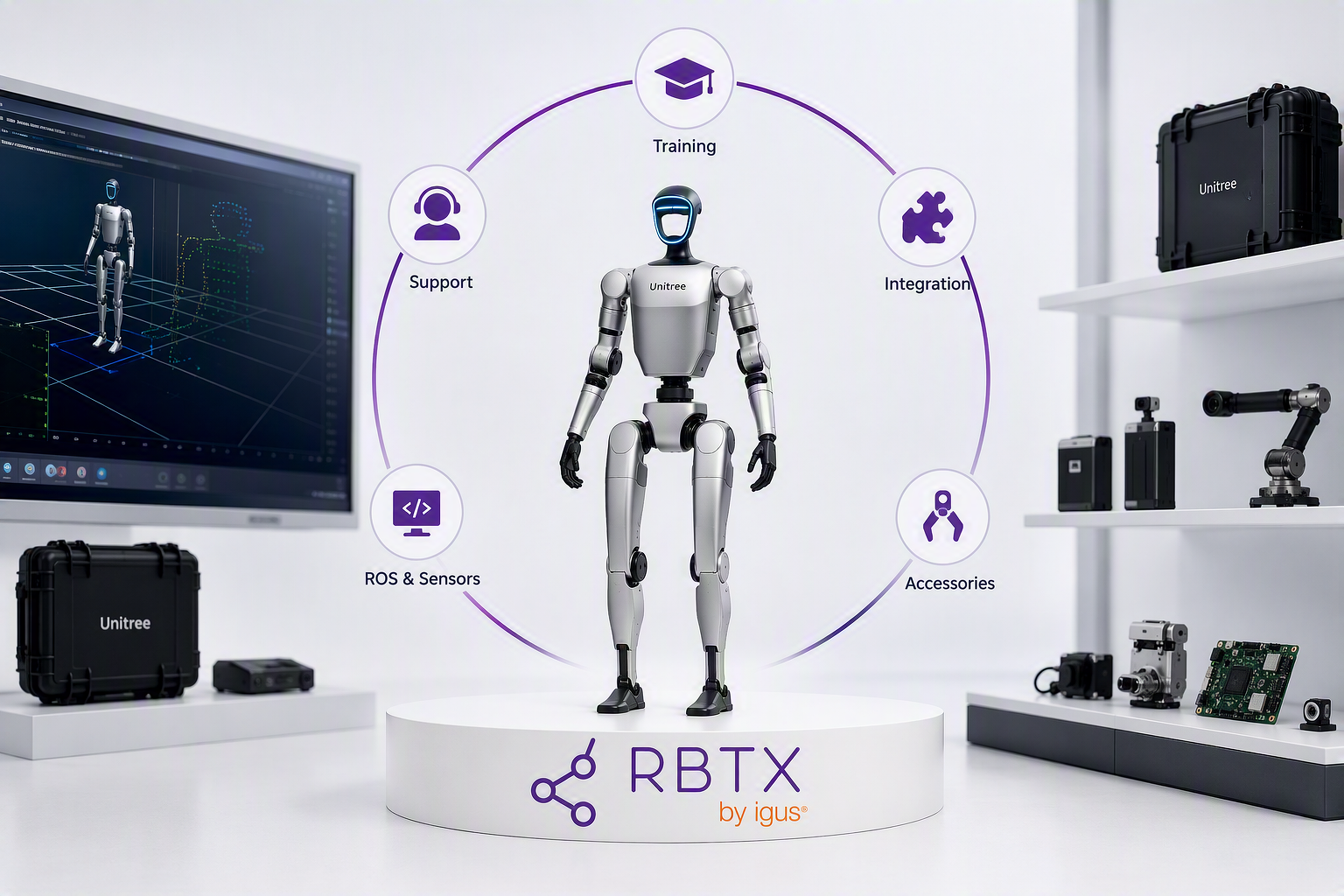
RBTX supports users in selecting the Unitree G1 EDU U5 and setting up a complete, functional robotics system. This includes training for operation, commissioning, and programming, as well as selecting accessories, end effectors, sensors, and safety components. For development projects, RBTX can support the coordination of the robot, software, network, computing hardware, and experimental setup. Integration focuses on interface validation, defining system functions, and involving suitable integration partners. This helps determine at an early stage which components are required for a demonstrator, research project, or proof of concept. Safety requirements, responsibilities, and acceptance criteria are considered from the outset based on the intended application.
RBTX로 구축된 저비용 솔루션
전문가와의 무료 영상 통화 예약


